How to Choose the Right Stacked Hydraulic Manifolds?
Choosing the right Stacked Hydraulic Manifolds begins with the circuit, not the catalogue image. A compact block may look efficient, yet hidden pressure losses can increase heat, noise, and response time. The correct choice depends on flow rate, operating pressure, valve functions, port size, materials, and service access.
Hydraulic control expert Herbert E. Merritt wrote, “The design of a hydraulic system must begin with the requirements of the controlled motion.” This principle remains practical today. A manifold should match the actuator’s real movement, including start-up loads, shock conditions, and repeated cycling. An engineer who checks only maximum pressure may miss contamination risks or poor emergency access.
Look closely at the installation space. Can a technician remove the upper valve without dismantling the lower section? Are test points visible beside the machine frame? Small details matter. Stacked Hydraulic Manifolds can reduce tubing, leakage points, and assembly time, but they also concentrate heat and maintenance responsibility.
Port orientation deserves careful thought. A reversed connection can create an expensive and embarrassing commissioning problem. It happens. CAD drawings should be reviewed alongside the physical maintenance route, because software cannot always reveal a blocked wrench path.
Reliable selection also requires verified data. Compare pressure-drop curves, seal compatibility, surface treatment, mounting strength, and cleanliness standards. Ask the supplier for test records and dimensional drawings. When uncertain, prototype the critical section before production. The best manifold is not merely the smallest one; it is the one that delivers stable control, safe servicing, and dependable performance over years of use.
Understanding Stacked Hydraulic Manifold Design and Applications
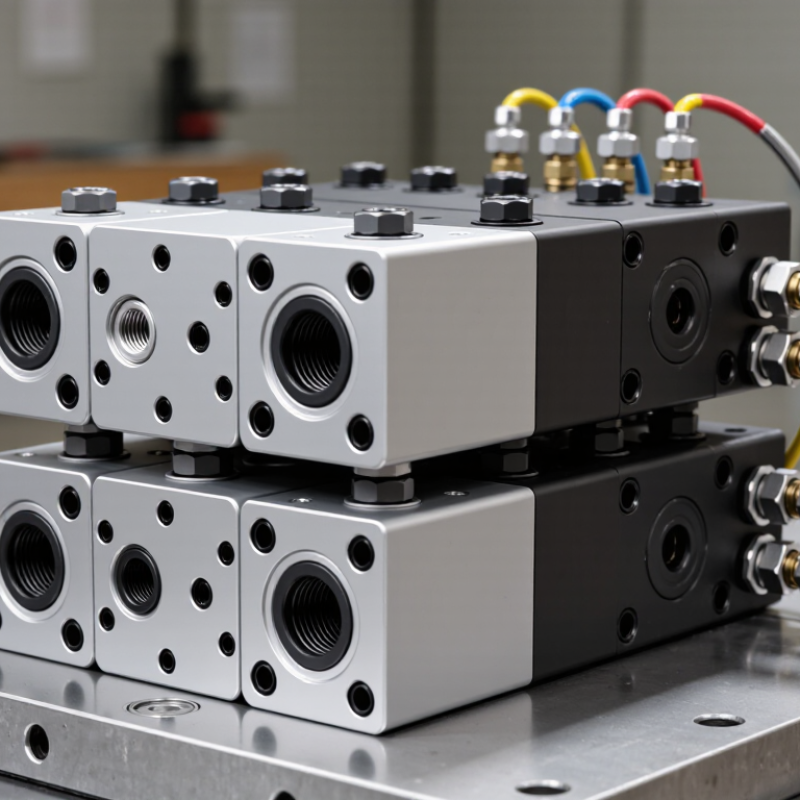
Stacked hydraulic manifolds combine several valves, passages, and control functions into a compact assembly. Their layered design reduces tubing, leakage points, and installation space. Each section must align correctly with the system’s pressure, flow, and actuator requirements. A small mismatch can create heat, noise, or unstable movement.
In practical commissioning work, I check the circuit diagram against the physical stack before applying pressure. Port labels, mounting surfaces, seal materials, and valve orientation deserve close attention. Flow capacity matters too. A manifold designed for low-speed clamping may restrict a high-demand lifting circuit. Pressure ratings should include realistic surges, not only normal operating pressure. That detail is often underestimated.
Applications range from machine tools and mobile equipment to presses and automated production lines. Compact stacking helps when cabinet space is limited. It also makes maintenance more organized, although replacing one section may disturb nearby components. I have seen clean-looking assemblies fail because contamination entered during installation. Filtration, flushing, and torque control are not minor tasks.
The best design balances accessibility with compactness. It should allow technicians to test pressure without dismantling half the system. This is where design reviews can become uncomfortable. A manifold may perform well on paper but remain difficult to service. Checking real maintenance habits, temperature changes, and emergency stopping behavior gives a more reliable assessment.
Identifying System Requirements for Manifold Selection
How to Choose the Right Stacked Hydraulic Manifolds?
Identifying system requirements should begin before comparing manifold sizes. Record the working pressure, peak pressure, flow rate, fluid type, temperature range, and actuator sequence. Measure the available installation space, including access for cartridge replacement and inspection. A compact manifold can reduce tubing, but tight ports may complicate maintenance. That trade-off is easy to underestimate.
Energy demand also matters. The International Energy Agency reported that industry consumed approximately 37% of global final energy in 2022. Pressure losses inside small passages can increase heat and pump loading. Select valve cavities and internal channels according to actual flow, not only nominal port size. Check pressure-drop curves under simultaneous operation. The U.S. Department of Energy’s Industrial Decarbonization Roadmap identifies efficiency improvements as important for reducing industrial energy use (2022). Hydraulic efficiency starts with accurate operating data.
Safety and reliability require documented assumptions.
ISO 4413:2010 emphasizes risk reduction, pressure control, clean fluid, and safe maintenance procedures. Specify filtration targets using ISO 4406 cleanliness codes, then verify them through fluid sampling. In field work, I have seen designs fail because the stated flow was theoretical. It was never measured. Consider emergency unloading, thermal expansion, shock loads, and future circuit changes. A manifold selected only for today’s machine may become restrictive after one added actuator. The best specification is sometimes imperfect, but it should clearly show what remains uncertain.
Comparing Valve Configurations, Materials, and Port Options
How to Choose the Right Stacked Hydraulic Manifolds?
Valve configuration determines how a stacked manifold behaves under pressure, heat, and maintenance demands. Modular directional valves suit systems requiring future expansion. Sandwich-mounted pressure controls save space but add interfaces and possible leakage points. A compact monoblock arrangement reduces connections, although troubleshooting becomes less flexible. According to MarketsandMarkets, the hydraulic valves market is expected to grow at roughly 6% annually through 2028. That growth reflects stronger demand for efficient, compact fluid-power systems. Pressure changes everything.
Material selection should match the working environment, not only the pressure rating. Steel manifolds generally offer high strength for mobile equipment and high-cycle applications. Aluminum reduces weight, but threads may require greater care during repeated servicing. Stainless steel is valuable in wet or corrosive environments, though its cost can be difficult to justify. ISO 4413 stresses safe design, contamination control, and clear identification of hydraulic components. A practical commissioning lesson is simple: clean oil cannot compensate for unsuitable metal or poor sealing.
Port options also influence reliability. SAE ports support common industrial connections, while BSPP and metric ports may better suit regional machinery. ORFS connections can reduce leakage risk under vibration, but they need correct face alignment and torque. Port size should reflect actual flow, not the manifold’s appearance. Oversized ports waste space; undersized ports increase pressure loss. I would also reserve one diagnostic port near the pump inlet. It adds cost. Sometimes, that small decision prevents hours of guesswork.
Evaluating Pressure, Flow Capacity, and Installation Constraints
How to Choose the Right Stacked Hydraulic Manifolds?
Pressure is the first filter, not the only one. A manifold rated at 250 bar may fail early when pressure spikes exceed the nominal setting. Check continuous pressure, peak pressure, temperature, and fluid compatibility together. ISO 4413 recommends controlling hydraulic risks through safe design, testing, and maintenance. Treat that standard as a baseline, not a complete sizing guide.
Flow capacity needs closer attention. The U.S. Department of Energy’s Industrial Technologies Program has reported that fluid power systems can lose significant energy through throttling, leakage, and unnecessary pressure drops. A restrictive manifold adds heat and slows actuator response. Calculate the highest simultaneous flow, then compare it with port and passage capacity. Keep velocity moderate. Smaller is not always better.
Installation constraints often decide the final configuration. Measure the envelope, port orientation, cartridge access, hose bend radius, and service clearance before ordering. A compact stack can save space but create awkward maintenance. Leave room for a pressure gauge and test connection. NFPA technical guidance emphasizes proper cleanliness and contamination control; even a well-sized manifold can suffer when assembly practices are careless. I have seen layouts pass the drawing review and fail during filter replacement. That detail is easy to miss. Recheck it.