Leave Your Message

China Best Hydraulic Threaded Cartridge Valves Supplier?

China’s hydraulic component market offers many suppliers, but a low unit price does not prove a valve will perform reliably. Hydraulic Threaded Cartridge Valves sit inside compact manifolds, where small differences in spool fit, sealing, and machining can affect heat, leakage, and response. A valve may look identical in a catalog. Its behavior under load may not be.

MarketsandMarkets’ Hydraulic Equipment Market report tracks demand across a broad equipment category, rather than threaded cartridge valves alone. That distinction matters: broad market growth cannot confirm a particular supplier’s quality. Buyers should verify pressure and flow ratings, fluid compatibility, dimensional drawings, inspection records, and batch traceability. Ask for test evidence. Check the details.

Anthony Esposito, author of Fluid Power with Applications, is a useful technical reference for fluid-power fundamentals. His work supports a practical selection principle: match components to actual operating conditions, not catalog labels. I could not verify a verbatim quotation from him about threaded cartridge valves, so I will not invent one. That is worth saying plainly. A careful supplier comparison should also examine sample consistency, machining finish, lead times, and technical support after delivery. For engineers sourcing from China, the central question is not simply which company sells the most valves. It is which supplier can document performance, explain limitations, and respond when a real circuit behaves differently than expected.
China Best Hydraulic Threaded Cartridge Valves Supplier?

What Are Hydraulic Threaded Cartridge Valves?

What Are Hydraulic Threaded Cartridge Valves?

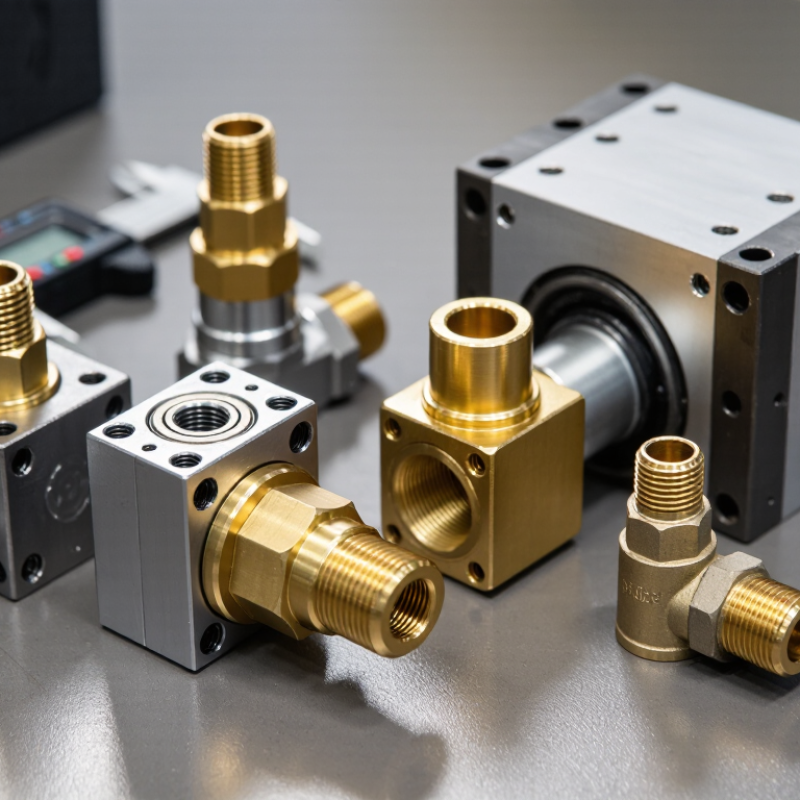
Hydraulic threaded cartridge valves are compact control components installed in a threaded cavity inside a manifold or machine body. Their cartridge-shaped housing contains moving parts that direct, block, or regulate pressurized oil. Depending on the design, a valve may control flow, pressure, or direction.

Small part, important job.

A typical unit includes a body, internal spool or poppet, spring, and sealing elements. When hydraulic pressure or an electrical signal acts on it, the internal element shifts and changes the oil path. For example, a directional cartridge can route oil to a cylinder, while a relief cartridge limits pressure at a set level.

Threaded installation makes replacement practical, but cavity dimensions, port arrangement, pressure rating, and fluid compatibility must match. A valve that fits the thread may still perform poorly if its flow capacity is wrong.

Tips:

Check the system schematic and cavity specification before choosing a replacement. Keep the mounting area clean; a tiny metal particle can affect sealing or movement. Diagnosis is not always tidy. A sticking valve may resemble a pump problem, so verify pressure and flow before replacing parts.


How Do Threaded Cartridge Valves Control Hydraulic Flow?

Threaded cartridge valves regulate hydraulic flow by changing the opening between internal metering surfaces. A solenoid, pilot pressure, or mechanical force moves a spool or poppet. A small shift can expose more port area, letting more oil pass. Small movement matters. In a pressure-compensated design, a compensator adjusts the opening as load pressure changes, helping hold flow steadier. The basic relationship is clear: greater opening area or pressure difference generally allows greater flow. Real circuits are less tidy; oil temperature, leakage, and contamination can change performance.

The cartridge screws into a prepared cavity, so the manifold controls its passages and mounting arrangement. When evaluating a supplier, engineers should check rated flow, pressure limits, response time, leakage, and cavity dimensions against the circuit. ISO 4406:2021 classifies hydraulic-fluid particle contamination across three size ranges: ≥4, ≥6, and ≥14 μm(c). Each code step represents roughly a doubling of particle concentration. That matters because particles can obstruct small metering gaps or accelerate wear. Cleanliness targets should match the valve and operating conditions, not just a generic specification. Pressure is not static. Bench testing under expected loads remains useful, even when catalog figures appear to fit.

Which Applications Use Threaded Cartridge Valves?

Threaded cartridge valves are used in mobile machinery, industrial equipment, and compact hydraulic power units. Their screw-in design lets engineers place directional, pressure, or flow-control functions inside a manifold. On a skid-steer loader, for example, a manifold can route oil to the lift arms and bucket without a large external valve bank. That saves space and reduces exposed hose connections. Small space matters.

Industrial presses and injection molding machines also use these valves to control clamping, movement, and pressure. A press may need a valve to hold a ram steady between cycles, while a molding machine needs repeatable flow during mold movement. Agricultural sprayers and harvesters use cartridge valves for functions such as steering and boom control. Conditions vary widely. Dust, vibration, changing oil temperature, and frequent duty cycles all affect performance. Engineers should match valve capacity and pressure ratings to the circuit, then check the manifold’s passages and filtration requirements. A compact layout can look tidy on paper yet run hot or respond slowly if flow paths are poorly sized. That detail is easy to underestimate. Routine inspection for leaks, contamination, and abnormal heat helps reveal problems before they interrupt operation.

Threaded cartridge valves are used in mobile construction equipment, agricultural machinery, industrial presses, material handling equipment, and marine deck machinery. The chart shows illustrative system operating pressure bands—not valve pressure ratings. Actual pressures vary by machine, circuit, and design.

How to Evaluate Chinese Hydraulic Cartridge Valve Suppliers?

How to Evaluate Chinese Hydraulic Cartridge Valve Suppliers?

Choosing a supplier takes more than comparing unit prices. Grand View Research estimated the global hydraulic equipment market at USD 45.7 billion in 2023 and projected 4.2% annual growth from 2024 to 2030. This wider market outlook makes dependable components and repeatable production important. Ask for pressure-flow curves, leakage limits, material specifications, and test records for the exact valve model. Check whether samples match the drawings and whether production batches receive documented inspection. Details matter.

For threaded cartridge valves, verify cavity dimensions, thread tolerances, sealing materials, and rated pressure against your manifold design. Request performance data at stated oil temperature and viscosity; a curve without test conditions is hard to compare. Ask how the supplier manages changes to machining, heat treatment, or seals. A factory visit or live video inspection can help confirm equipment and test procedures. Still, paperwork cannot reveal every production weakness, and one sample is not proof of long-term consistency. Run a pilot batch in your own system.

Tips:

Send the same technical checklist to every candidate. Compare response accuracy, not just speed. Request traceable batch records and a clear warranty process. Test for pressure drop, leakage, and response time under realistic operating conditions. Keep your acceptance criteria written down.

What Quality and Service Factors Define a Reliable Supplier?

A reliable hydraulic threaded cartridge valve supplier should provide more than a polished catalog. Check whether pressure ratings, flow capacity, materials, and fluid compatibility are clearly documented. These details help prevent leakage, unstable actuator movement, and premature wear. Ask for dimensional drawings and inspection records. A sample valve should match its stated thread size and sealing geometry. Small details matter.

Tips: Share your operating pressure, oil type, temperature range, and duty cycle before requesting a quotation. Ask how the supplier controls machining tolerances and batch consistency. Request a written response-time commitment for technical questions. Keep it specific.

Service quality becomes visible when problems arise. A dependable supplier can explain installation requirements and help investigate pressure loss or spool sticking. Clear traceability also matters; batch records make it easier to identify affected parts. Check packaging and shipping practices, especially if valves may sit in storage. A fast reply is useful, but accuracy matters more. No supplier is flawless, and a confident promise alone proves little. Compare documented test results, communication, and follow-up support before making a decision.

China Best Hydraulic Threaded Cartridge Valves Supplier? - What Quality and Service Factors Define a Reliable Supplier?

Evaluation Dimension What to Check Evidence of a Reliable Supplier Why It Matters
Product Performance Confirm the valve’s rated pressure, flow capacity, operating range, leakage limits, and response requirements against the application. Product data sheets state test conditions and performance limits; sample or production testing is available when required. Performance depends on the complete hydraulic circuit, fluid, temperature, and operating conditions—not on a general product description alone.
Cavity and Thread Compatibility Verify the cartridge cavity, port thread form, size, sealing method, and installation dimensions against the manifold drawing. Dimensioned drawings and interface details are provided. Applicable references, such as ISO 7789 for two-port cartridge valve cavities, are identified where relevant. Similar-looking cartridges or threads may not be interchangeable. Compatibility should be confirmed from the actual interface specifications.
Materials and Construction Review body and internal component materials, surface finishes, seals, springs, and compatibility with the intended hydraulic fluid and temperature. Material and seal options are documented, with clear limits for fluid compatibility and operating conditions. Material and seal selection affect corrosion resistance, wear, sealing, and service life.
Cleanliness and Contamination Control Ask how components are cleaned, assembled, protected, and packaged, and whether cleanliness requirements can be specified. Documented handling and packaging procedures are available; cleanliness limits are agreed for the intended system where needed. Particulate contamination can impair hydraulic components and contribute to sticking, wear, or leakage.
Testing and Inspection Clarify which checks are performed, such as dimensional inspection, functional testing, pressure testing, and leakage testing. Inspection criteria, test conditions, and batch or serial traceability are defined in advance and supported by records as agreed. Specific, documented checks make it easier to verify that supplied parts meet the agreed requirements.
Quality Management Review the supplier’s quality processes, control of nonconforming product, corrective actions, and change management. Current quality-system documentation is available for review. ISO 9001 certification, if claimed, can be checked for scope and validity. A quality-management certificate indicates a management system; it does not by itself prove that a particular valve meets its performance requirements.
Documentation and Traceability Check availability of drawings, specifications, material information, test records, and identification of supplied batches. Documents match the ordered configuration and revision; traceability arrangements are explained before purchase. Consistent records support incoming inspection, maintenance, and investigation of quality issues.
Customization and Engineering Support Discuss special settings, seal options, port configurations, drawings, and engineering changes before ordering. Technical questions receive specific answers, and proposed changes are reviewed and approved against written requirements. Clear engineering communication reduces the risk of ordering a configuration that does not fit the manifold or application.
Lead Time and Supply Planning Ask for quoted lead times, production capacity, order-minimum requirements, and how delays or shortages are communicated. Quotations state delivery assumptions, and order status can be tracked against confirmed dates. Transparent planning helps buyers coordinate production and maintain appropriate spare-parts availability.
Warranty and After-Sales Service Review warranty terms, claim procedures, technical support availability, and the information required to investigate a failure. Terms and response channels are provided in writing, with a defined process for troubleshooting and handling valid claims. Accessible support can help resolve installation, application, and product-quality questions more efficiently.
Commercial Clarity Compare the exact valve configuration, included documentation, packaging, delivery terms, and payment conditions in each quotation. The quotation identifies the part specification and revision, quantity, price basis, delivery terms, and any stated exclusions. Comparing equivalent specifications prevents price comparisons from overlooking important differences in scope.

Evaluation note: Confirm requirements against the machine design and applicable standards. Pressure, flow, leakage, cleanliness, and service-life targets should be specified for the application rather than assumed to be universal.