7 Best Pilot Operated Check Valve Manufacturers?
Choosing among the 7 Best Pilot Operated Check Valve Manufacturers requires more than comparing catalog prices. These valves protect hydraulic actuators from unintended movement, especially when a cylinder holds a heavy load or operates above ground level. A dependable Pilot Operated Check Valve must open smoothly, seal firmly, and respond correctly to pilot pressure. Small errors can create visible problems: cylinder drift, pressure spikes, noisy operation, or delayed release.
Professor Hubertus Murrenhoff, a respected fluid-power researcher at RWTH Aachen University, states, “A component must always be judged within the complete hydraulic system.” That principle guides this manufacturer comparison. The strongest suppliers usually provide clear pilot ratios, tested cracking pressures, contamination guidance, and detailed installation data. They also explain how temperature, oil viscosity, mounting position, and hose length affect performance. These details matter in real workshops, where clean laboratory conditions rarely exist.
This guide examines seven manufacturers through practical criteria. Product consistency comes first. Technical support matters, too. So do sealing quality, pressure ratings, customization options, certifications, delivery reliability, and after-sales service. Some brands excel in compact mobile hydraulics. Others perform better in industrial presses, lifting systems, or demanding automation equipment. No ranking is perfect. Application needs can change the result.
Look beyond polished brochures. Compare test methods, replacement availability, and field experience. A valve may look impressive on paper. It still needs to survive vibration, heat, contamination, and repeated cycling. The following manufacturers deserve careful attention, but engineers should confirm every selection against the actual circuit design and operating conditions.
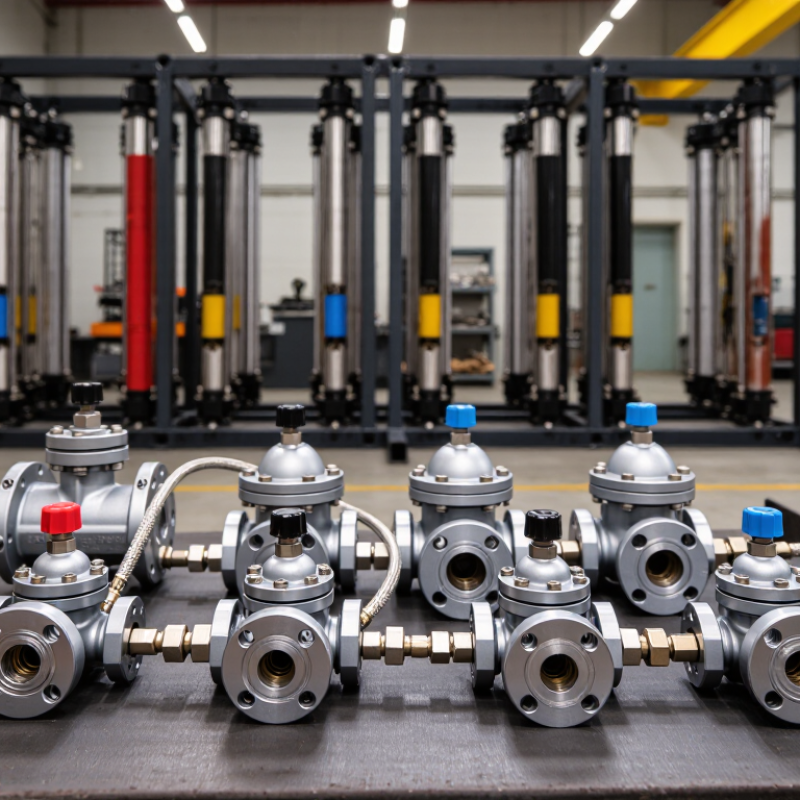
Pilot-Operated Check Valves: Definition, Components, and Purpose
Pilot-Operated Check Valves: Definition, Components, and Purpose
A pilot-operated check valve allows hydraulic fluid to flow freely in one direction and blocks reverse flow until pilot pressure opens it. In a typical cylinder circuit, the valve can hold a suspended load when the pump stops. That makes it useful for positioning, load holding, and reducing unwanted actuator movement. It is not a substitute for correct circuit design or safe load support.
Inside the valve, a poppet or ball seals against a seat, while a spring helps keep it closed. A pilot piston, control port, and internal passages provide the release action. When pressure reaches the pilot port, the piston shifts the poppet, allowing reverse flow. Small details matter: contamination on the seat can cause leakage, while insufficient pilot pressure can prevent release. Troubleshooting can be less tidy than a diagram suggests.
The broader hydraulic equipment market provides context for the valve’s role. Grand View Research estimated that market at USD 42.3 billion in 2023 and projected a 4.8% compound annual growth rate from 2024 to 2030. This is a market-wide estimate, not a valve-specific forecast. When selecting a valve, engineers should check rated pressure, flow, pilot ratio, leakage limits, and fluid compatibility against actual operating conditions. A neat specification sheet may still miss the machine’s real pressure spikes.
How Pilot Pressure Opens the Valve and Controls Reverse Flow
Pilot-operated check valves manage reverse flow through pressure, not a simple spring alone. A small pilot line senses upstream pressure and releases hydraulic force from the main valve chamber. When inlet pressure reaches the required pilot setting, the disc or piston lifts smoothly. Reverse pressure then closes the main element and limits backflow.
Pilot pressure must overcome spring force, line friction, and downstream pressure. Engineers should verify cracking pressure, closing speed, flow coefficient, and allowable leakage. A valve may open correctly but close too slowly during pump shutdown. That delay can create water hammer. The 2024 Grand View Research industrial valves report estimated the global market at approximately USD 77 billion in 2023. This growth reflects demand for safer flow control in energy, water, and process facilities.
The seven best manufacturers should provide traceable testing, pressure-cycle records, and materials suited to the medium. Look for compliance with recognized valve and pressure-equipment standards. Field experience matters too. A stainless-steel pilot circuit can resist corrosion, while a poorly sized pilot tube may cause sluggish response. Small details matter. The MarketsandMarkets industrial valves research projects continued market expansion through 2028, but market growth does not guarantee reliable operation. I would still question catalog ratings without application data. Ask for test results at actual temperature, viscosity, pressure differential, and flow conditions. That evidence separates a dependable supplier from a merely convincing specification sheet.
Key Performance Criteria for Comparing Valve Manufacturers
Choosing among the seven best pilot-operated check valve manufacturers requires more than comparing prices. Performance begins with stable cracking pressure, fast response, and reliable reverse-flow protection. Ask for test data under the pressure, temperature, and fluid conditions your system will experience. A valve that performs well in clean laboratory water may behave differently with oil, gas, or suspended particles.
Check the manufacturer’s control over materials, machining, assembly, and final inspection. Body materials must match corrosion risks, while seals should tolerate pressure cycling and temperature changes. Review leakage limits, cycle-test results, pilot ratio, flow capacity, and pressure-drop curves. Traceable certificates and clear maintenance instructions also show technical maturity. Field service matters. Spare parts should be available, and technical staff should explain failure modes without vague promises. A polished datasheet can still hide weak testing. That deserves scrutiny.
Tips: Request a witnessed performance test when the application is critical. Compare results at minimum, normal, and peak pressure. Inspect sample valves for clean ports, consistent threads, and protected sealing surfaces. Ask how rejected parts are recorded and corrected. Also, verify whether the supplier has experience with your operating medium, not just similar equipment. Small details matter. A missing test condition can change the entire comparison.
Seven Pilot-Operated Check Valve Manufacturers to Know
Seven Pilot-Operated Check Valve Manufacturers to Know
Pilot-operated check valves support controlled motion in hydraulic cylinders, presses, lifting systems, and mobile equipment. Seven manufacturer profiles deserve attention: hydraulic specialists, mobile-equipment suppliers, aerospace producers, process-valve makers, subsea developers, custom OEM manufacturers, and industrial automation companies. Each group applies different testing methods and materials.
According to MarketsandMarkets, the global hydraulic valves market was valued at about USD 10.6 billion in 2023 and may reach USD 14.4 billion by 2028. That growth increases pressure on manufacturers to prove performance, not merely publish flow ratings. Engineers should inspect cracking pressure, pilot ratio, leakage limits, response time, and contamination tolerance. Small details matter. A dirty spool can delay load release.
Grand View Research estimates that the broader industrial valves market will expand steadily through 2030, supported by energy, water, and manufacturing upgrades. However, market reports often combine many valve types. Their figures should guide research, not replace field validation. Look for manufacturers offering material certificates, pressure-cycle data, traceable testing, and clear installation instructions. I would also question unusually high flow claims without temperature and viscosity conditions. That skepticism is useful. A valve that performs well on a test bench may behave differently beside a vibrating pump, a long pilot line, or a cold outdoor cylinder. Reliability depends on the complete circuit, not the valve alone.
7 Best Pilot Operated Check Valve Manufacturers? – Seven Pilot-Operated Check Valve Manufacturers to Know
This comparison presents seven common manufacturer capability profiles, rather than naming or ranking specific companies. Actual specifications vary by product and supplier.
| Manufacturer profile |
Typical valve focus |
Common applications |
Useful selection checks |
| Hydraulic component specialist |
Inline or modular pilot-operated check valves for hydraulic circuits. |
Clamping, lifting, and actuator load holding. |
Rated pressure, flow capacity, pilot ratio, and mounting style. |
| Mobile-equipment valve supplier |
Compact valves designed for mobile hydraulic systems. |
Construction machinery, agricultural equipment, and vehicle-mounted systems. |
Vibration tolerance, port connections, temperature range, and contamination control. |
| Industrial manifold specialist |
Cartridge or manifold-mounted designs for integrated hydraulic blocks. |
Machine tools, presses, and industrial automation equipment. |
Cavity standard, installation dimensions, leakage limits, and service access. |
| High-pressure hydraulic supplier |
Products intended for higher-pressure circuits, subject to model-specific ratings. |
Heavy industrial hydraulics and demanding load-holding duties. |
Maximum operating pressure, pressure spikes, fatigue rating, and test documentation. |
| Custom-engineering valve maker |
Application-specific configurations, materials, or connection arrangements. |
Special-purpose machinery and non-standard hydraulic circuits. |
Engineering support, prototype availability, documentation, and production lead time. |
| Fluid-power distribution supplier |
A range of standard valve formats sourced from one or more manufacturers. |
Maintenance, repair, and general-purpose hydraulic installations. |
Traceable manufacturer data, stock availability, technical assistance, and replacement compatibility. |
| Application-focused system supplier |
Valves selected or assembled as part of a broader hydraulic system solution. |
Equipment packages requiring coordinated valves, manifolds, and controls. |
Circuit review, system testing, after-sales support, and clearly defined performance limits. |
Before purchase, confirm the valve’s rated pressure and flow, pilot pressure requirements, fluid compatibility, installation orientation, and specified leakage performance in the supplier’s technical documentation.
Applications, Industry Standards, and Supplier Selection Factors
7 Best Pilot Operated Check Valve Manufacturers?
Applications, Industry Standards, and Supplier Selection Factors
Pilot operated check valves support high-pressure systems where ordinary check valves may react too slowly. They appear in hydraulic power units, compressor skids, pressure-control lines, and emergency isolation systems. Their pilot circuit helps control opening and closing under changing pressure. The 2024 International Energy Agency World Energy Investment report estimates global energy investment will exceed 3 trillion dollars. Nearly 2 trillion dollars may support clean-energy projects. That growth increases demand for reliable fluid-control equipment, but application details still matter more than market size.
Industry standards should guide supplier comparisons. API 6D covers pipeline valve design, manufacturing, testing, and documentation. ISO 5208 defines pressure-testing procedures and leakage rates. ASME B16.34 addresses pressure-temperature ratings, materials, and inspection requirements. A supplier should provide traceable material certificates, test records, pressure ratings, pilot-response data, and clear maintenance instructions. Ask whether testing reflects your actual medium, temperature, and cycling frequency. Generic test results can mislead.
Tips: Check the valve’s cracking pressure, pilot ratio, response time, and fail-safe behavior. Confirm compatibility with hydraulic oil, gas, water, or corrosive process fluids. Review spare-seal availability and technician training. A neat datasheet is not proof of field reliability. I would request reference installations and witness a factory pressure test when the service is critical. Selection is rarely perfect; noise, contamination, and installation orientation may still expose weaknesses after commissioning.
7 Best Pilot Operated Check Valve Manufacturers? Applications, Industry Standards, and Supplier Selection Factors
ASME pressure-class comparison for supplier preselection. The values below represent pressure ratings at approximately 38°C for Group 1.1 carbon-steel materials under ASME B16.34; actual allowable pressure depends on material, temperature, size, and design.
Higher pressure classes may be suitable for demanding oil and gas, power generation, and process applications, while lower classes are often sufficient for utility and water-service systems. During supplier selection, verify API 6D or API 594 applicability, ASME B16.34 compliance, ISO 5208 leakage testing, materials compatibility, pilot-system response, temperature limits, documentation, and after-sales support.