2026 Best Stacked Hydraulic Manifolds for Global Buyers
Choosing the right Stacked Hydraulic Manifolds can determine whether a machine runs quietly or struggles under pressure. Global buyers face different temperatures, fluids, standards, and service conditions. A manifold that performs well in a German test bay may behave differently in a dusty mining site.
This guide examines pressure ratings, port layouts, valve compatibility, materials, sealing systems, machining quality, and supplier support. It also considers practical details, including corrosion resistance, oil cleanliness, replacement access, and delivery reliability. Ernest C. Fitch, a respected fluid-power contamination specialist, warned, “Contamination is the single greatest cause of hydraulic system failure.” That warning remains highly relevant. Tiny particles can damage valves, restrict flow, and create costly downtime.
Performance matters. So does traceability.
The best selection is not always the cheapest option. Buyers should compare verified test data, technical drawings, inspection records, and real operating feedback. Some manufacturers provide excellent catalog specifications but limited application guidance. Others offer strong engineering support but longer production times. That difference deserves attention.
No buying guide is perfect. Application data may be incomplete, and supplier claims still require independent checking. A careful buyer should confirm pressure peaks, fluid compatibility, temperature ranges, mounting space, and local compliance requirements before ordering. This article presents leading options for 2026, while recognizing that field conditions can challenge laboratory results. The final decision should balance efficiency, safety, serviceability, and long-term ownership cost.
What Are Stacked Hydraulic Manifolds and How Do They Work?
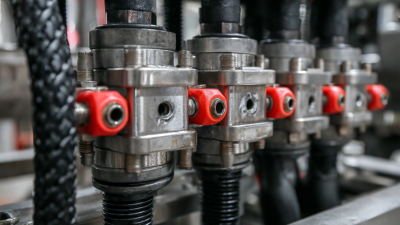
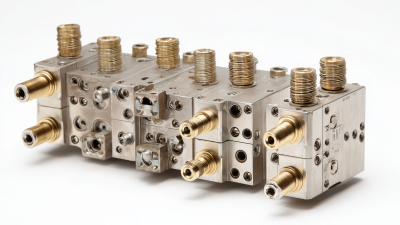
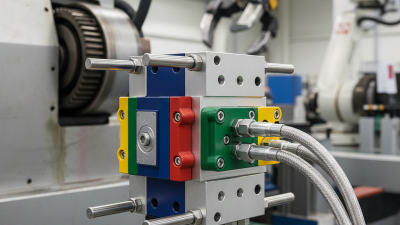
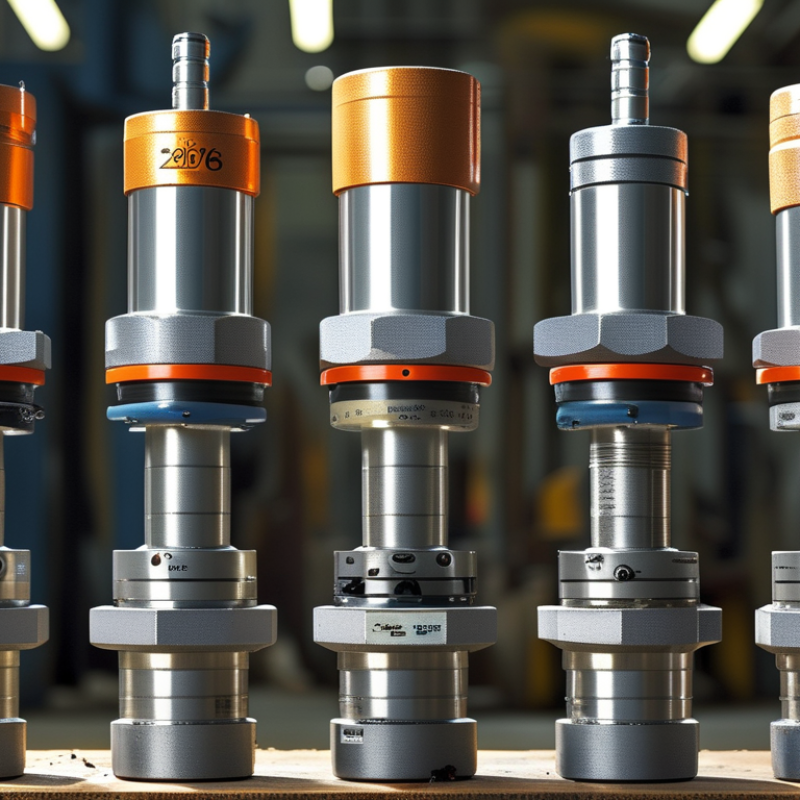
Stacked hydraulic manifolds combine several cartridge or sandwich valves into one compact assembly. Each valve controls pressure, flow, or actuator direction. Internal passages replace much of the external tubing. This creates a cleaner path between the pump, tank, and cylinder.
A typical stack starts with a base plate connected to the power unit. Valve sections then sit above it, sealed by O-rings and secured with tie bolts. When the directional valve shifts, pressurized oil moves through precisely drilled galleries toward port A or B. Return oil travels back through the tank passage. Pressure-relief valves protect the circuit, while flow-control valves regulate actuator speed.
Compactness matters.
MarketsandMarkets estimated the global hydraulic equipment market at USD 43.4 billion in 2023, projecting about USD 56.5 billion by 2028. This growth reflects continuing demand for efficient mobile and industrial systems. Stacked manifolds support that demand by reducing hose connections, installation space, and potential leak points. However, compact designs are not automatically better. A restrictive passage can increase pressure loss and heat. Engineers should verify flow rates, working pressure, oil viscosity, and contamination limits against ISO 4413 and ISO 4406 guidance. Field experience also shows a simple weakness: one damaged seal can affect several functions. Correct torque and cleanliness remain essential. The “best” manifold depends on the circuit, not appearance.
Key Design Features of the Best Stacked Hydraulic Manifolds
2026 Best Stacked Hydraulic Manifolds for Global Buyers
Key Design Features of the Best Stacked Hydraulic Manifolds
The best stacked hydraulic manifolds begin with a clear circuit layout. Each valve section should follow the actual flow path, not merely fit available space. In field inspections, compact blocks often reduce hose length and leakage points. However, dense layouts can complicate maintenance. Leave enough clearance for tools and coil replacement.
Pressure capability must match real operating conditions, including pressure spikes and continuous duty. Quality manifolds use carefully selected steel or aluminum alloys, depending on load, corrosion exposure, and weight limits. Internal passages need smooth machining. Rough passages increase turbulence, heat, and energy loss. Small details matter.
Sealing design deserves close attention. Compatible seals should withstand the working fluid, temperature range, and repeated cycling. Port standards must be identified clearly for international installation. Confusing threads remain a common and expensive mistake. I recommend documented drawings, labeled ports, and test records for every production batch.
Contamination control is equally important. Clean assembly areas, protective plugs, and flushing procedures help prevent early valve failure. Thermal expansion should also be checked in outdoor equipment or high-cycle systems. A manifold may pass a pressure test yet perform poorly after months of vibration. That gap needs honest review. Field data should guide the next revision.
Global Standards, Certifications, and Buyer Requirements
For global buyers, a stacked hydraulic manifold should match documented standards, not only a pressure rating.
ISO’s 2023 Survey of Management System Standards recorded more than 1.2 million ISO 9001 certificates worldwide. This figure reflects the value of controlled processes, but certification alone proves little. Ask for material certificates, heat-treatment records, dimensional reports, and traceable serial numbers.
ISO 4413 remains a key reference for hydraulic safety, especially during design, installation, and maintenance. Buyers should request pressure-test results, leakage limits, cleanliness grades, and a clear schematic.
For European projects, the Pressure Equipment Directive may apply when pressure and fluid conditions meet its scope. RoHS and REACH evidence can also matter for exported assemblies. Requirements differ by destination.
In practical audits, small details often reveal risk.
Check port markings against drawings. Confirm sealing materials at the actual temperature range. Review whether test equipment is calibrated. A manifold rated at 315 bar may still fail through poor contamination control or incorrect assembly torque.
Industry market reports, including recent fluid-power outlooks from the National Fluid Power Association, continue to identify supply reliability and service capability as major buyer concerns. Certification documents are useful. They are not a substitute for engineering judgment, and that is where many purchasing checklists remain imperfect.
How to Select, Install, and Maintain a Stacked Hydraulic Manifold
Selecting, installing, and maintaining a stacked hydraulic manifold requires more than comparing port sizes. MarketsandMarkets’ 2024 Hydraulic Equipment Market report estimates growth from USD 47.3 billion in 2023 to USD 59.5 billion by 2028. That expansion raises demand for reliable, serviceable assemblies. Check working pressure, peak pressure, flow capacity, fluid compatibility, and valve response. Leave space for tool access. A compact design can become difficult to repair.
During installation, confirm the circuit against the approved schematic. Remove protective caps only before connection. Even a small fiber can damage a precision spool. Flush every tube, inspect sealing surfaces, and tighten fasteners in a cross-pattern. Follow the manufacturer’s torque values, not hand feel. ISO 4413 emphasizes risk control, cleanliness, and safe pressure release in hydraulic systems. Install pressure gauges near critical sections. They expose unexpected pressure loss.
Maintenance should include leak checks, temperature readings, filter inspection, and recorded operating pressures. Use particle analysis when contamination is suspected, then compare results with ISO 4406 cleanliness codes. Replace damaged seals early. Do not keep tightening a leaking fitting; the thread may already be distorted. I have seen clean-looking systems fail after careless hose assembly. The lesson is uncomfortable. Visual inspection alone is not enough. Review the manifold after commissioning, after the first operating week, and whenever cycle time changes. Some maintenance schedules seem excessive, but skipped records make failures harder to explain.
2026 Best Stacked Hydraulic Manifolds for Global Buyers - How to Select, Install, and Maintain a Stacked Hydraulic Manifold
| Manifold Configuration |
Typical Circuit Function |
Typical Rated Pressure |
Typical Flow Range |
Common Valve Size |
Recommended Application |
Key Selection Considerations |
| 2-Station Directional Stack |
Controls two independent hydraulic actuators from one supply and return path. |
210–315 bar |
10–40 L/min per station |
NG6 / CETOP 03 |
Compact machinery, material handling, machine tools |
Confirm actuator flow, neutral condition, port orientation, and pressure-drop limits. |
| 4-Station Directional Stack |
Provides centralized control for four actuator circuits with shared P and T galleries. |
210–315 bar |
15–60 L/min per station |
NG6 / CETOP 03; NG10 / CETOP 05 |
Automation lines, presses, agricultural equipment |
Check simultaneous-flow demand and ensure the inlet section can handle the total pump flow. |
| Pressure-Compensated Stack |
Maintains more consistent downstream flow when load pressure changes. |
210–350 bar |
5–80 L/min per station |
NG6 / CETOP 03; NG10 / CETOP 05 |
Systems requiring repeatable actuator speed |
Specify compensator setting, minimum pressure differential, and expected load variation. |
| Parallel-Flow Stack |
Allows selected circuits to receive flow simultaneously from a common pressure gallery. |
160–250 bar |
20–100 L/min total |
NG10 / CETOP 05; NG16 / CETOP 07 |
Mobile hydraulics and multi-function equipment |
Calculate combined flow, heat generation, priority logic, and pump capacity. |
| Load-Sensing Stack |
Sends a load-pressure signal to a variable-displacement pump or control system. |
210–350 bar |
10–120 L/min total |
NG10 / CETOP 05; NG16 / CETOP 07 |
Energy-efficient mobile and industrial systems |
Verify signal-line routing, standby pressure, orifice requirements, and pump compatibility. |
| Modular Sandwich Stack |
Combines directional valves with pressure, flow, check, or sequence modules. |
160–315 bar |
5–80 L/min per station |
NG6 / CETOP 03; NG10 / CETOP 05 |
Systems requiring easy expansion or service replacement |
Match mounting pattern, sealing method, gallery configuration, and stack-bolt length. |
| High-Flow Monoblock Base with Stacked Sections |
Supports larger flow channels and multiple high-demand work functions. |
210–350 bar |
60–250 L/min total |
NG16 / CETOP 07; NG25 / CETOP 08 |
Heavy equipment, presses, injection and forming machinery |
Review port size, internal gallery capacity, thermal load, structural support, and hose routing. |
Selection, Installation, and Maintenance Checklist
| Project Stage |
What to Verify |
Practical Requirement |
Typical Acceptance Check |
| Selection |
Pressure, flow, fluid type, temperature, and duty cycle |
Rated pressure should exceed the maximum operating pressure, including transient spikes. |
Compare the circuit schematic with the manifold datasheet and valve cavity standard. |
| Selection |
Port and mounting compatibility |
Use the correct ISO 4401 / CETOP mounting size and suitable regional thread form. |
Confirm thread type, port location, O-ring arrangement, bolt spacing, and envelope dimensions. |
| Installation |
Cleanliness and preparation |
Keep all galleries, ports, valves, and fittings free from dust, chips, sealant fragments, and moisture. |
Inspect and cap open ports; flush the system to the cleanliness level required by the valves. |
| Installation |
Fastener tightening |
Tighten stack bolts and fittings evenly using the supplier’s specified torque values. |
Check for parallel mating faces, correct O-ring compression, and no visible manifold distortion. |
| Commissioning |
Air removal and pressure testing |
Start at low pressure, operate actuators slowly, and increase pressure in controlled steps. |
Check leakage, abnormal noise, temperature rise, actuator motion, and relief-valve operation. |
| Maintenance |
Filter condition and fluid quality |
Use the filtration level specified for the most contamination-sensitive valve in the stack. |
Record filter differential pressure, fluid condition, operating temperature, and service hours. |
| Maintenance |
Leakage, fasteners, and seals |
Inspect joints and mounting hardware during scheduled shutdowns; replace damaged seals. |
No external leakage, loose hardware, cracked surfaces, or unexplained pressure loss. |
Note: Pressure, flow, temperature, port size, and mounting values are typical engineering ranges for selection guidance. Final ratings must be confirmed against the applicable manifold, valve, fluid, seal, and installation specifications.